
A top federal court official defended Judge James Boasberg’s gag orders that hid subpoenas related to the FBI’s Arctic Frost investigation, saying this week that the chief judge in Washington would likely have been unaware that the subpoenas’ intended targets were members of Congress.
The administrative office for the federal courts indicated that the chief judge in D.C. routinely blindly signed gag orders when the Department of Justice requested them, including during Arctic Frost, the investigation that led to former special counsel Jack Smith bringing election charges against President Donald Trump.
The administrative office’s director, Robert Conrad Jr., provided the explanation on behalf of Boasberg to Senate Judiciary Committee Chairman Chuck Grassley, R-Iowa, in a letter first obtained by Fox News Digital.
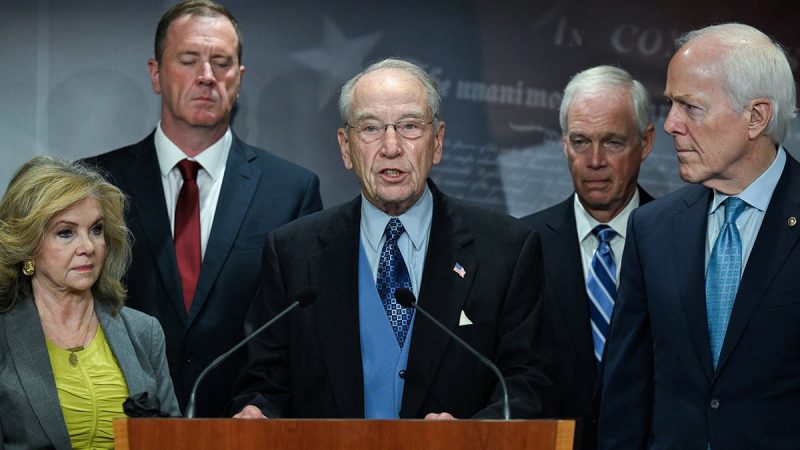
The letter came in response to Grassley, Sen. Ron Johnson, R-Wis., and Rep. Jim Jordan, R-Ohio, demanding an explanation from Boasberg about why he authorized the one-year gag orders, which barred phone companies from telling Republican Congress members that their records were subpoenaed by Smith in 2023.
Conrad said he could not address those specific subpoenas and gag orders, in part because some of the material was sealed, but that he could help the lawmakers ‘understand relevant practices’ in place during Arctic Frost.
The DOJ’s requests for gag orders, also known as non-disclosure orders, ‘typically do not attach the related subpoena; rather they identify the subject accounts only by a signifier — e.g., a phone number,’ Conrad wrote. ‘As a result, [non-disclosure order] applications would not reveal whether a particular phone number belonged to a member of Congress.’
Read a copy of the letter below. App users click here.
Grassley reacted to the latest correspondence from the court by faulting the Biden DOJ for seeking the gag orders from Boasberg without notifying the judge that they pertained to Congress members.
Grassley noted that the DOJ’s Public Integrity Section gave Smith’s team the green light to subpoena lawmakers’ phone records but had also told the prosecutors to be wary of concerns lawmakers could raise about the Constitution’s speech or debate clause, which gives Congress members added protections in prosecutorial matters.
‘Smith went ahead with the congressional subpoenas anyway, and it appears he and his team didn’t apprise the court of member involvement,’ Grassley told Fox News Digital. ‘Smith’s apparent lack of candor is deeply troubling, and he needs to answer for his conduct.’
The DOJ revised its policy in response to an inspector general report in 2024 so that prosecutors were required to notify the court if they were seeking a gag order against a Congress member so that judges could take that into consideration when deciding whether to authorize the orders. Smith’s subpoenas pre-dated that policy shift.
The subpoenas, and the gag orders that kept them concealed, have drawn enormous criticism from the targeted lawmakers, who alleged that the Biden DOJ improperly spied on them over their alleged involvement in attempting to overturn the 2020 election and that Boasberg was complicit in allowing it. Among the top critics is Sen. Ted Cruz, R-Texas, who was set to lead a since-postponed hearing Wednesday examining the case for impeaching Boasberg. Impeachment of judges is exceedingly rare and typically has only occurred in response to crimes like corruption and bribery.
Johnson said he remained unsatisfied with Boasberg after the letter from the administrative office.
‘Judge Boasberg’s refusal to answer questions from Congress about his approval of unlawful gag orders is an affront to transparency and an obvious attempt to deflect any responsibility for his awareness of or involvement in Jack Smith’s partisan dragnet,’ Johnson told Fox News Digital. ‘Judge Boasberg must immediately lift the seal that is apparently preventing him from addressing Congress’ questions and provide the public a full explanation for his actions.’
Public documents reveal that as chief judge of the D.C. federal court, Boasberg authorized numerous gag orders that blocked phone companies from telling about a dozen House and Senate lawmakers that Smith had subpoenaed their phone data.
Smith had sought a narrow set of their records, which included details about when calls and messages were placed and with whom the Congress members were communicating. The records did not include the contents of calls and messages. Smith has defended the subpoenas, saying they were in line with department policy and ‘entirely proper.’